
Clients trust us to deliver a complete brand book before they can even see what we are capable of in their specific business context.
Yes, portfolio is one thing, but how can one be sure that we are the right branding agency for this specific project?
The answer is: they can’t. So, we talk. Human to human. We have conversations. It’s not a game of Q&A, but deep, real, contextual conversations.
Our clients are not robots and neither are we. Together, we ask each other questions to get a grasp of our clients’ business and how does our branding agency fit in this picture.
People trust us with their business because they feel heard and understood. Because they know we are here for them every step of their journey. Because we solve problems.
If you need branding or rebranding services, this is what you can expect.
We are Premiere M and this is our branding process.
Step 1. Say Hello
Our branding process starts with us saying Hello and getting to know each other. It’s a casual conversation about you, your business, your brand, the choices you made that got you this far. An honest and open conversation about why you need branding services and why now.
Step 2. Estimates
Now that we understand your needs, we provide an estimate of budget and time for your project. Simple, clear, concise information on: scope of work, projected timeline, estimated costs, and a list of activities included.
Step 3. Paperwork
Once Step 2 completed, we negotiate terms and sign a contract. Typically, we ask for 50% of the project fee up front. Practice proved us that people who invest from the beginning are more dedicated to getting things done. Remaining payments will be spread out over the project.
Step 4. Discovery Meeting
Your customer represents a demand pattern from multiple people. We need to discover that pattern for your customers.
So, let’s find out who you are, what you stand for and why would anyone care enough to trust your brand with their hard-earned money.
Too honest? We don’t do anything but honest. Be prepared for simple but tough questions.
Step 5. Mood Boards
We use mood boards for inspiration or things – visual, audio, ideas, concepts, principles – that “show, don’t tell” the basics about your brand (see example). Just by looking at it, we can get a certain vibe. How do we feel when thinking about your brand?
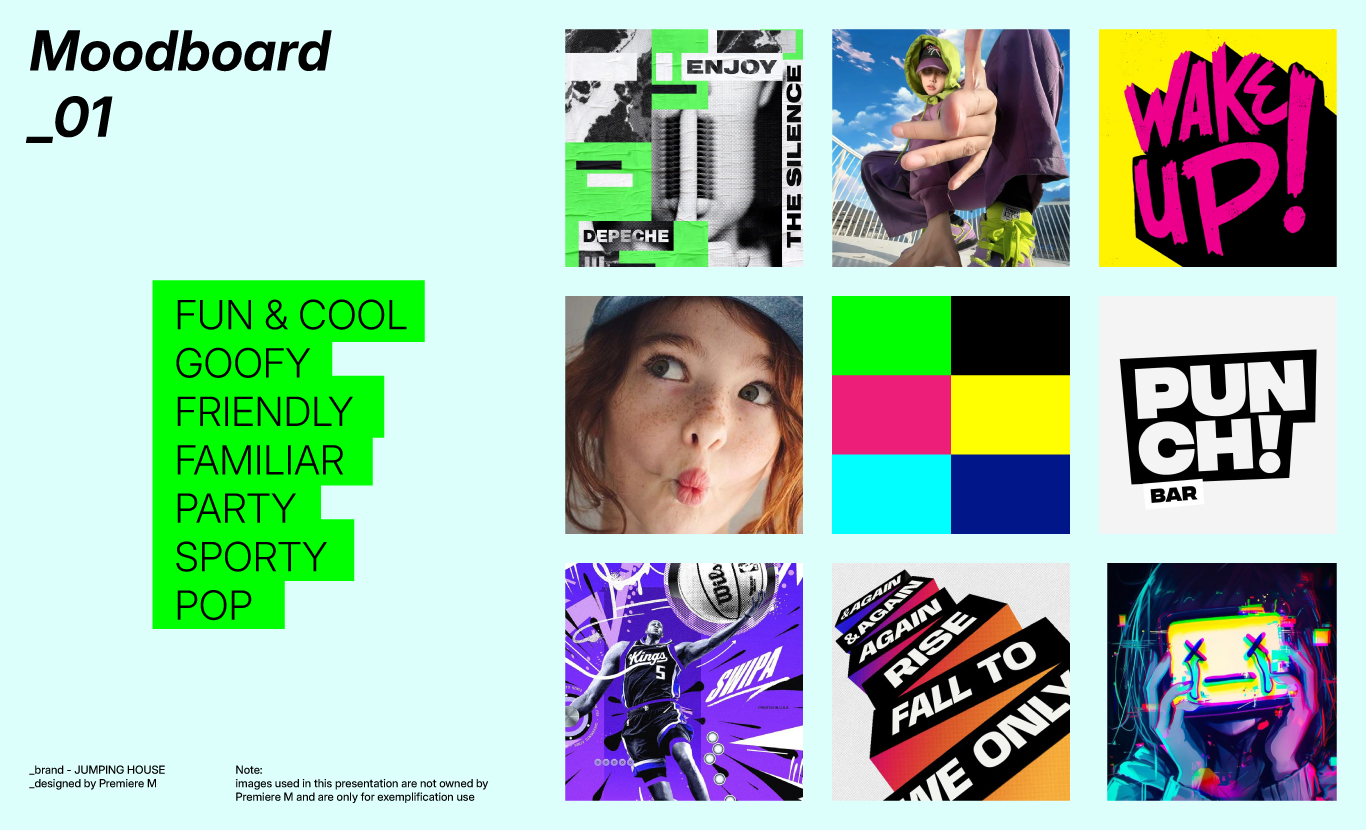


We both do this exercise: you and us.
Then compare the two boards and this is how we know if the conversations we had were indeed fruitful. Next move: compile the two mood boards, calibrate, and use it for the rest of the branding process as a reference.
Step 6. Brand Narrative
This is the moment actual branding work begins. It starts with acknowledging where you are and where you want to be, what is the best way to get there and what do we need to develop to make your brand stand out.
It’s the most strategic part of the entire branding process. Positioning.
Over two decades, we learned that what the client wants and what the client needs are not always the same thing.
Branding is not just about aesthetics.
A brand is not a logo.
Branding is about who you really are deep down and why. It’s about being authentic. (Remember the mention on tough questions? These are it.)
We are here to help you gain clarity on positioning and light the way for Step 7.
Step 7. Get Visual
Once the brand path is clear, we turn ideas and concepts into something visible.
Create a logo, but also putting it into practice so you can see how things fall into place and generate a certain feeling.
Create mockups to show you how your brand can look and feel.
Create designs to show the new visual identity.
Once a set of design work is ready, you will get the full presentation, you can ask questions, challenge the concept and become part of the final edit.
Your input is much needed and wanted.
Step 8. Revisions
At this point, a detailed conversation is in place. Topics refer to: adjustments, changes, approaches, brand materials, calibration of concepts, all with arguments. Bring on the PROs and CONs and assess impact.
We value your feedback and make sure the outcome is what your brand must be for you and your customers.
Usually, we do two sets of revisions.
Step 9. Brand Book & Assets
The brand book is a document that lays out everything someone needs to know to understand, represent, and use your brand correctly and consistently.
It includes elements and assets like mission/vision/values, positioning, key messages, target audience, visual identity, imagery, typography, layout examples (online and offline), tone of voice, guidelines.
Step 10. Let There Be Brand!
Once we have brand approval, it’s time to share it with the world. A brand rollout package includes the list of assets we agreed throughout the process that are valuable for your brand. Some examples:
Congrats, you reached THE END of the process!
Final Thoughts
In over 20 years of building brands, lessons have been learned:
These insights guide our creative process and our work. We will apply them to your brand.
Thank you for accepting these terms.